
Aktivitet den senaste tiden

You have been a busy boy Pieter! Nice fresh look to the pages. I am on a PC but checked out some lists. and as always they function beautifully. It will be interesting to hear how it works on a phone and I might check that out too. I don't do any social media either. I so appreciate this site and use it often. Thank you!!!

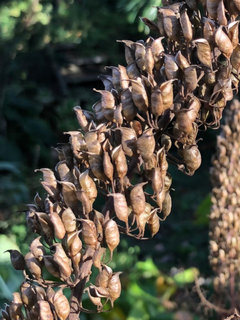
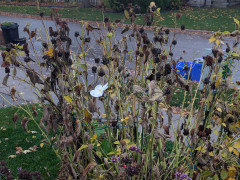
I even like the seedheads.
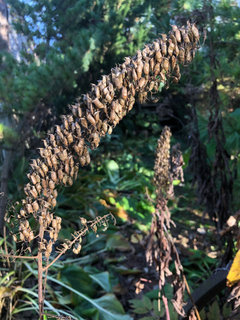
Like so many birds gathering.
tj

@peren.all Zone 5a Ontario Canada Beautiful! And no, I never saw it there. I might take you up on that offer if I find a likely spot for it! Thank you!

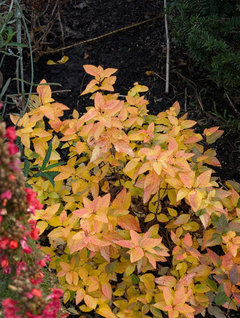
Fothergillas? Those are bulletproof in my garden. I have two drifts of "Blue Shadow" -- one in the front of the house and one in the back off the deck. I had "Mt. Airy" at my other house, and same story. Gorgeous foliage, and my eyes and nose both quite enjoy the spring blooms (smell lightly of honey).
The winterberries are also easy, low-maintenance plants that do extremely well here, both at this house and my previous house (different cultivars, though). I've also seen them happily growing in the woods around here. They're nothing special to look at in summer, though they're nice enough. The foliage stays very tidy and isn't bothered by pests or disease. The show really starts when the leaves drop -- those fire-engine red berries are just gorgeous, particularly against fresh-fallen snow. Oddly, the birds leave them alone until later in the winter, they must not find them particuarly tasty. Who knows.
Both fothergillas and winterberries are must-haves for me.
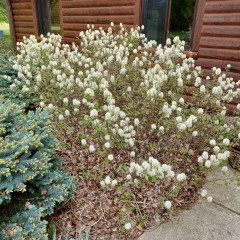
Here's a pic of the fothergilla blooms from this spring (they fully leaf out after blooming):
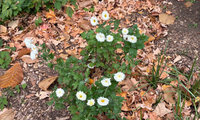
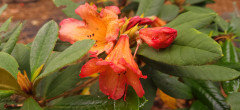
Rhododendron Medusa has decided to bloom again.
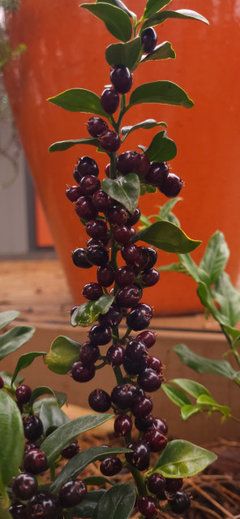
Sarcococca (S. confusa probably, but these are often confused in the trade).

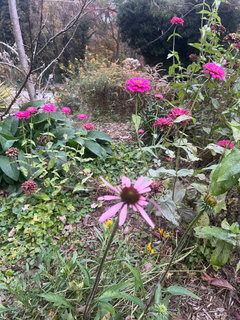
I have some perennials doing a puny late season rebloom including coneflower
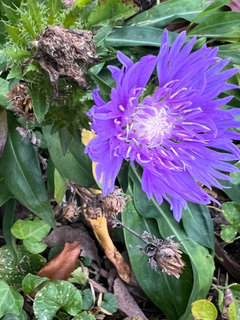
Stokesia doesn’t know when to quit
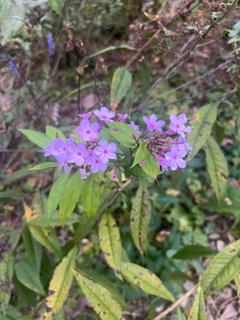
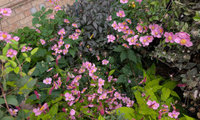
Even some phlox rebloom.
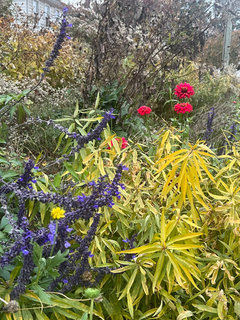
Amsonia foliage with zinnias and salvia.

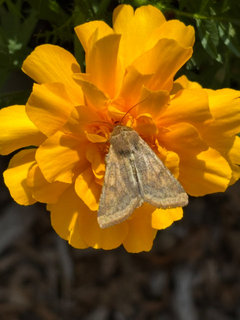
indianagardengirl - I believe that is a corn earworm moth. I had one on my marigolds yesterday (10/29):
rouge21 - I haven't seen any monarchs here for over two weeks, but in just the last couple days there have been a number of monarch observations on iNaturalist in the Great Lakes area:
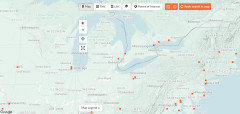
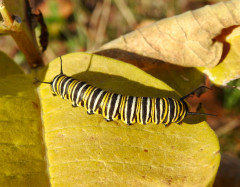
There were actually 4 monarch sightings in Toronto alone yesterday and today (10/29-10/30), including one caterpillar(!):
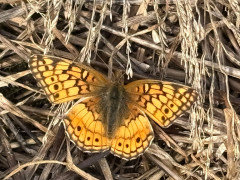
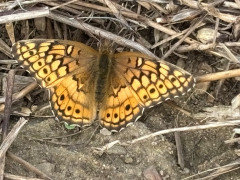
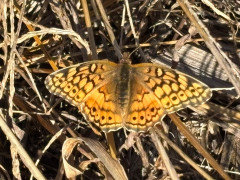
After a walk along the creek this afternoon (10/30), I took a short cut back to my car across a soybean(?) field that had been harvested (only stubble left), and was utterly amazed when I kicked up, not one, but several Variegated Fritillaries. It was sunny, but only around 55F, with a cool breeze. I assume they were waiting for warmer weather to migrate south.

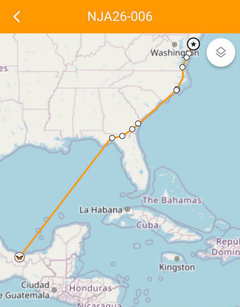
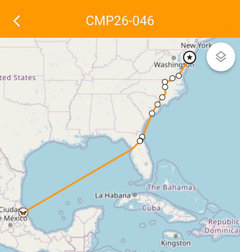
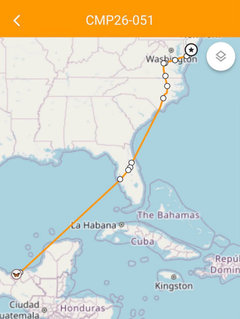
Some monarchs were tagged, apparently w/some kinda micro-transmitter, and were recorded where they stopped and finally ended up. Their treks across the Gulf are astounding.
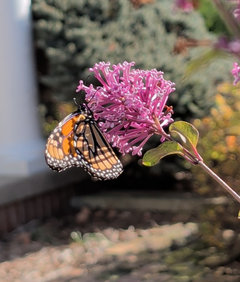
This would have to be considered a very rare sight in Michigan in November - a monarch on a lilac flower - from iNaturalist (11/3/26):
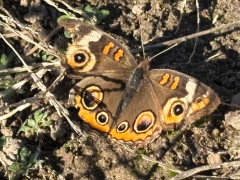
It looks like pollinator season may be coming to an end here, with cooler weather and snow(!) forecast for week's end, so these may be my final observations for the year. Yesterday (11/10) there were still a few variegated fritillaries and at least one buckeye in the same field where I saw them at the end of Oct:
Hover flies, various bees, and a few moths are enjoying the Nanking chrysanthemum flowers:
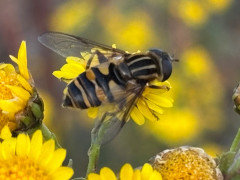
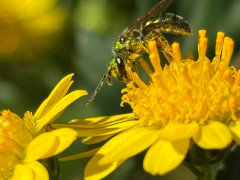
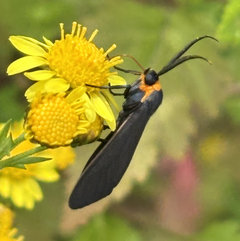
And this could be the final meal of the year for a Yellow Dung Fly (photo today 11/11/26):
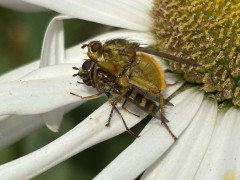

Poked around just a bit -- I can't get past the Ms in the variegated list.
Ben, there's a good reason for that: the stand-alone lists haven't been finished as yet. As it says on the landing page, ' The category lists are a work in progress ' and I'll be the first one to admit I've been remiss on getting back to the project. The issue with it not seeming to work at all got me back to it and with ChatGPT's input it's nice to see it functioning again. I'll return to it over the winter months but at present I'm in the middle of a total revamp of the Hosta List website I maintain for Don Rawson, that's a mammoth task but it's going well and should be finished in about a week or so. I'll post when that update is done....
Pieter

Our Candy Corn today (November 7):
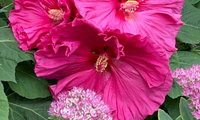
I spoke too soon. It is now November 7 and I think I spied its last flower for 2026 (Blue River II hibsicus); almost 4 months after seeing its first flower in mid July.

Houzz is a west coast company - I have one more hour!!!
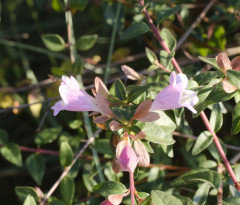
Abelia schumannii is a flowering machine. It runs from late May to frost.
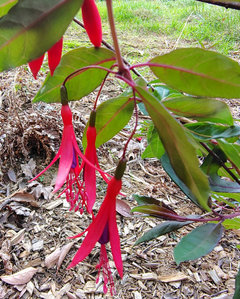
Fuchsia 'Porphyrio' survived this cold last winter with no extra mulch, so I think it's fully established, unless we have another once-every-30-year winter like 2013-2014. This has some R. regia blood, so is heat resistant compared to the pure F. magellanica cultivars.
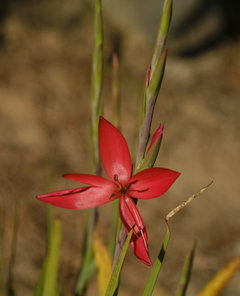
Hesperantha 'Deborah's Red' from Cistus, though it's been a while since they offered it.
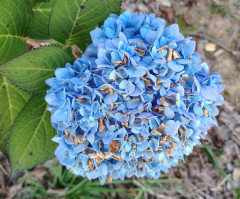
Some Hydrangeas are still going.
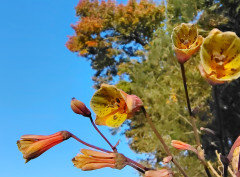
Lastly, another potentially tender plant that made it through this winter with no special protection, to roughly 5F multiple times, Bomarea hirtella/edulis.
A bit more detail since I was in a rush last night...this was my absolute, positively, last try with this plant. So the fact it's been perennial and flowering now for 3 years in a row shows why it pays to be persistent. I've experimented with this (fickle in the mid-Atlantic) species all the way back to my parent's house garden in the late 1990s! As I've discussed with other plants that are in some way marginal for one's climate, the secret now was growing it out from seed to select for a 'local cultivar' that is happy under your own conditions. And it was not even my first attempt to do that. I had first tried maybe 6-7 years ago with seed bought from Tobias Spanner's RPS. I got only maybe one or two really weak growing seedlings that amounted to nothing - didn't get past a few inches. Then I tried again, and I can't even remember where this seed came from: either Jelitto or Alplains, probably. A few died as seedlings when it got hot - they didn't like that. (My understanding is that this basically comes from a central American highland climate! You wouldn't expect them to be even zone 8 hardy, much less zone 7! It's sort of similar to the mystery of Alstroemerias, to which it is related, except some of those are at least native to the colder Andes of Chile.) Finally I got 2 really well established plants. Then this 'almost as cold as polar vortex' winter happened and took out 1, leaving this one.
Final warning about this plant, from when I tried to move it from my parent's garden to the townhouse I owned for a while. It makes fingerling potato-like tubules that are counter-intuitively not propagative. They are just for starch storage. Apparently whatever regrows in the following years is smaller and more fibruous, and if you move a clump, you have to move at least one of those. They detach easily from the 'bulbs'. Back in 2002 I tried to regrow a few of those bulbs, to no avail.
Last edit: I know for sure the first time I tried this circa 1999, the seed came from Chiltern Seed in the UK. How I miss the days when that was a carefree process. I believe I should give credit where credit is due!

November 5, and a couple of plants out front still going strong. Same plants as earlier, but they are the only things blooming and they are still at it:
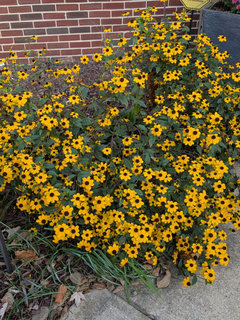
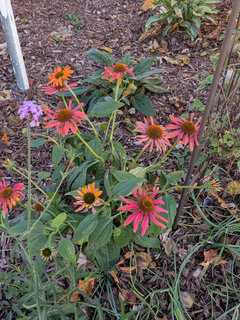
I’m sure I’ve mentioned it every single month, but worth saying again that Gaillardia Independence is a powerhouse. It just never stops!
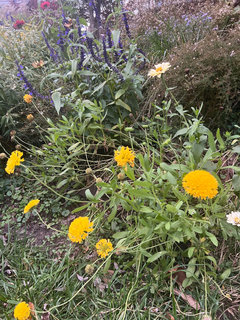
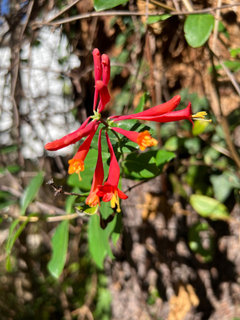
Also my native honeysuckle is blooming.
I use #7. They have the rotating handle that reduces hand fatigue. I would get the same again if mine went missing.
I've used a Felco #2 for years, mostly on my roses, and it's the one I keep reaching for because it fits my hand well and stays sharp with just a quick clean now and then. If your hands run on the smaller side, the #6 is worth a look too — same sturdy build, but a little easier to close. Either way, I'd go for the real thing over a cheap copy; a good pair like that lasts for years.
I'd go for the real thing over a cheap copy; a good pair like that lasts for years.
For sure @asjad492. As I mentioned I did have felcos for several years but I lost them back in 2025; I was sure they would turn up...but alas it hasnt happened :(.
Prairiemoon,
Plum forgot about my list of top perennials. Here goes:
1. Malva moschata 'Alba' - a myriad of small, single, white blooms from early summer until autumn. ~30" X 20", nicely proportioned plant, pretty firm in the ground, no staking needed. Zone 5, no sweat. Can be a reliable reseeder, which comes in handy because this is a short lived perennial. Transplant only young seedlings growing as volunteers because older plants, except container grown ones, transplant poorly because of sensitive tap roots. 3+ months of continuous bloom.
2. Malva alcea fastigiata - all the same attributes as M. moschata 'Alba', but tall and columnar in growth habit. 4' X 2', pale to medium pink blooms in abundance from early summer to autumn. Zone 5, ditto as above. Same traits regarding rewarding volunteers, short lived 2 yrs., maybe 3. Blooms wonderfully the first year from an early sowing inside the house.
3. Heliopsis 'Summer Sun'. Other cultivars are also v. good. Yellow daisies, 2.25" in abundance from early summer to autumn. Dead head spent blooms to keep them coming. 36" X 28". Very hardy. Self supporting.
4. Salvia 'May Night,' other cultivars bred from S. 'May Night,' very good, too. 16" X 12", long bloom season, from mid spring to autumn. One of the few perennials that make fresh basal break s throughout the blooming season. Must be dead headed to encourage lateral spikes as well as basals.
5. Coreopsis verticillata'Moonbeam'. an older variety, but hard to beat. 14" X 14". Pale yellow 1" single daisies cover the plant in an informal, pleasantly relaxed growth habit. Some dead heading will help the long bloom period, from early summer to autumn, perform at its best. Quickly becomes a dense patch that needs division almost every other year, but who's complaining. Some newer cultivars may equal C. v. 'Moonbeam', but not likely surpass it.
6. Coreopsis v. 'Zagreb', this cultivar is rigid in growth habit, short, 12" X 8",_and rich yellow in bloom color. A nice complement to C. v. 'Moonbeam.'
7. Prunella 'Loveliness', 'Pink Loveliness,' and 'White Loveliness (hard to find),' is one stellar perennial often overlooked, but for a short, ~12" X 12+" clumping, heavy flowering perennial, it's hard to resist its continuous supply of blooms from early summer until autumn. Spent spikes must be dead headed to keep it pumping blooms. The newer varieties 'Bella Blue,' and 'Freelander,' are even more heavy flower ing than the 'Loveliness,' series.
8. Achillea ptarmica, 'The Pearl,' 18" X 12" is a joy to grow. Its double, pompom-like 3/8"-1/2" blooms are produced in abundance from early summer to autumn. A dwarf form, Achillea ptarmica, 'Ballerina,' which reaches 10" X 8", duplicates,,'The Pearl,' in every way, but diminutively.
9. Echinacea 'Magnus,' or 'Ovation,' are older varieties of Echinacea in the original genus, mauve, to toned-down fuchsia color, but wider, horizontally held petals.
10. Phlox paniculata 'David.'. What a great perennial, huge panicles of pure white flowers on 36" stiff stems that are awesome to view. Nothing says summertime better than Phlox. Blooming starts in late June and continues until autumn. Don't forget the fragrance, too.
11. Hibiscus.
(to be continued if a response to this post ensues.......)
Moses.
Other than transplanting some Oriental lily bulbs and planting some daffs and crocus, I think I am done planting for the season.
I told you all I was on a spree --- Since August, I have transplanted numerous shrubs, (4) trees, and some other odds-and-ends. I addition, I planted these new things:
Trees:
* Canadian Hemlock
* (2) tulip trees
* Dawn redwood "Soul Fire"
* Yellowwood
* Eastern redbud
* Heptacodium "Tianshan"
* Limber pine "Vanderwolf"
* River birch
* Japanese maple "Jordan"
Shrubs:
* Lilac (common lilac)
* Saucer magnolia
* Deutzia "Nikko"
* Peegee hydrangea "Limelight"
* Threadleaf cypress "Mops"
* Threadbranch cypress "Angel Hair"
* Norway spruce "Pusch"
* (2) Southwestern white pine "Loma Linda"
* Korean pine "Blue Ball"
* Bosnian pine "Banderica"
I posted in another thread how I want to incorporate more conifers and shrubs -- well, there you have it. For now...there's still work to do, but the biggest and hardest job for me was transplanting the trees and getting the new ones in, it's harder for me to dig big holes nowadays. But I got it done, and am glad I did while I still have the strength and stamina to do so. I fixed my mistake of planting too-small trees down by the road and will be pleased when I finally have more privacy that I've been after for years. My new conifers will give me something more to look at in the winter (especially that limber pine -- it's beautiful!) , and I'm very much looking forward to next spring when everything leafs out - I think it will all look quite nice. The effort will be worth it, these things have a permanance that perennials don't, I won't have to do much tending to things as the years continue to creep up on me.
The only two that I'm concerned might not make it are the yellowwod and the Japanese maple. IDK why I'm concerned about the yellowwood, I can't really think of a reason it wouldn't make it, maybe it's just because I'd be disappointed if it didn't -- I really wanted it, and it's something I don't see for sale often around here.
I have not had success with Japanese maples at this house, so I don't have high hopes nor expectations for this "Jordan". It is in a relatively wind-protected spot up by the house, though it might get clipped a bit so that's in it's favor. Honestly, I won't really care if it doesn't make it. I didn't see it fully leafed out so I'm actually not sure if I'm even going to like it, neither am I sure it's the right tree for the spot, but it is the right size for by the front door and was relatively inexpensive for a decent-sized specimen. Everything I bought is under warranty for a year, so I won't be out any money if it croaks. (now watch -- just when I said that it will turn out to be one of my favorite trees LOL!)
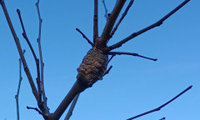
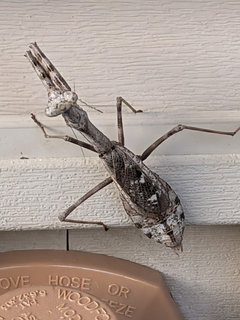
Bill, your chart above was quite timely, since this guy showed up on my back deck tonight:
I cut the height back by 1/3. Where are you located? Just the nearest large city,
I agree with floral_uk that winter climate makes a big difference here. In a colder spot I would leave more of the stems standing as protection and just clear the loose leaves around the base. Cutting it back by about a third, like peren.all suggested, seems like a safer middle ground than cutting it really short before winter.
Same here, I'm still chipping away at it a little at a time rather than trying to do everything in one go. Most of my leaves are raked up now, but I still have a few perennials to cut back and some pots to empty before the cold really settles in. Like rouge21, I did manage to get my bulbs in, so at least there's something to look forward to in spring!
Lots more leaves to rake. I have cut back a lot of perennials but there is still so much more to cut back.
I got interupted in that since I have 4 bush cords of wood to stack. I got one cord done yesterday and will do more today as well as cutting back more in the garden.
I have root barrier for two areas I would like to get done. One is around a stand of Macleaya cordata. I adore this beast but I am getting too old to deal with the runners every year. Wish me luck with this because there is a lot of rock. Not little rocks but boulders every time I dig.
The second area for the root barrier is to separate Hosta clausa var. clausa (a ground cover Hosta) from Anemone Robustissima. I call it the battle of the titans,
It all depends on the weather if I can get the root barrier done. This week is lovely and warm but a hard freeze is imminent.
I may decide to switch things up and start the root barrier between raking leaves. It would not be the first time I did cutting back in the freezing cold.